As investors increasingly turn towards digital assets, a new hybrid investment is capturing their attention—tokenised gold. Promising the stability of physical gold with the convenience and accessibility of cryptocurrencies, tokenised gold is emerging as a compelling alternative for traditional and crypto-savvy investors alike. But does tokenised gold truly deliver on its promises, or is it merely another passing trend?
Tokenised Gold: Hype or Hope?
19 May 2025
What is Tokenised Gold, and How Does It Work?
Tokenised gold is a digital representation of physical gold, typically issued on a blockchain. Each token is backed by a specific quantity of real gold, securely stored in vaults. One of the leading examples of tokenised gold is PAX Gold (PAXG), an Ethereum-based token, each representing one fine troy ounce of gold.
PAX Gold (PAXG) is a fully regulated, digital representation of physical gold, issued by Paxos Trust Company. Each PAXG token corresponds to one fine troy ounce of a London Good Delivery gold bar — the highest quality gold standard globally — stored in secure, audited vaults in London. Unlike synthetic gold derivatives (like ETFs or futures), PAXG provides actual ownership of physical gold, which can be redeemed in whole or fractional amounts. Through blockchain tokenisation, Paxos eliminates the inefficiencies traditionally associated with owning and trading gold: high storage costs, limited accessibility, and illiquidity.
What makes PAXG particularly innovative is that it marries the permanence of gold with the fluidity of blockchain technology. Built on the Ethereum network as an ERC-20 token, PAXG can be transferred globally 24/7, stored in any compatible wallet, and traded seamlessly on various exchanges. Its ownership ledger is transparent and immutable, enabling users to verify their gold holdings down to the specific serial number, weight, and purity of the underlying gold bar. The fractional nature of the token allows anyone to own as little as 0.01 troy ounces, significantly democratising access to high-grade gold.
PAXG also stands out for its regulatory robustness and operational transparency. Paxos is a state-chartered Trust Company regulated by the New York Department of Financial Services (NYDFS). It ensures that all gold reserves backing the tokens are segregated from company assets and held bankruptcy-remote, meaning token holders’ gold is secure even in the unlikely event of Paxos’ insolvency. Additionally, PAXG is subject to independent third-party audits, smart contract audits, and monthly attestations confirming a 1:1 match between tokens and physical gold.
From an operational perspective, users can easily acquire, hold, trade, or redeem PAXG. Redemption is flexible: holders can opt for physical delivery (if they possess full bars), convert tokens into unallocated gold entitlements, or simply liquidate them for fiat currency. The ecosystem also supports low transaction fees, no storage costs, and compatibility with lending platforms — making PAXG not only a safe haven asset, but a versatile, programmable instrument in modern finance. Whether as a hedge, a store of value, or a means of decentralised wealth preservation, PAXG transforms gold into a liquid, borderless, and digitally native financial asset.
Why Tokenized Gold?
Gold has been a trusted store of value for centuries, prized for its stability and role as a hedge against inflation and economic uncertainty. However, physical gold has drawbacks: it’s cumbersome to store, expensive to transport, and difficult to divide for small transactions. Meanwhile, cryptocurrencies like Bitcoin offer liquidity, portability, and 24/7 trading but are volatile and lack intrinsic value. Tokenized gold aims to bridge these worlds, offering the best of both.
The rise of tokenized gold is driven by several factors:
- Accessibility: Tokenized gold lowers the entry barrier. Investors can own fractional amounts of gold (e.g., 0.01 ounces), making it accessible to those who can’t afford whole bars or coins.
- Liquidity: Unlike physical gold, which requires dealers or brokers, tokenized gold can be traded instantly on global exchanges, offering 24/7 liquidity.
- Modernization: As financial systems embrace blockchain, tokenized gold integrates gold into decentralized finance (DeFi) protocols, enabling yield generation or use as collateral.
- Safe Haven Appeal: In volatile markets, tokenized gold retains gold’s safe-haven status while offering digital convenience, appealing to both traditional and crypto investors
Tokenized gold combines the strengths of physical gold and digital assets while mitigating their weaknesses, positioning it as a balanced alternative. Here’s how it compares:
Compared to Physical Gold
- Lower Costs: Physical gold involves storage fees, insurance, and transportation costs. Tokenized gold eliminates these, as the gold is stored by custodians, and blockchain transactions are typically cheaper.
- Fractional Ownership: Tokenized gold allows investors to buy small fractions, democratizing access. For example, instead of purchasing a $2,000 gold coin, an investor can buy $20 worth of PAXG.
- Ease of Trading: Trading physical gold often involves delays and intermediaries. Tokenized gold can be traded instantly on blockchain platforms, with faster settlement times.
- Global Access: Tokenized gold can be bought and sold worldwide without geographical restrictions, unlike physical gold, which may face import/export challenges.
Compared to Bitcoin
- Stability: Bitcoin’s price volatility is a double-edged sword, offering high returns but significant risk. Tokenized gold, backed by physical gold, is far less volatile, inheriting gold’s stable value.
- Intrinsic Value: Bitcoin’s value is still being debated. Tokenized gold is tied to physical gold, which has intrinsic value due to its scarcity and industrial uses.
- Safe Haven Status: While Bitcoin is sometimes called “digital gold,” tokenized gold directly ties to gold’s proven role as a hedge during economic downturns, as seen in the 2022 bear market.
- Integration with DeFi: Like Bitcoin, tokenized gold can be used in DeFi for financing, staking, or other uses, but with lower risk due to its stable backing.
By blending gold’s reliability with blockchain’s efficiency, tokenized gold offers a “middle way” that appeals to investors seeking stability without sacrificing modern functionality. The tokenized gold market, including assets like PAXG and Tether Gold, has already reached a $1.6 billion market cap, signaling strong adoption.
Shariah Compliance of PAXG
For Muslim investors, Shariah compliance is a critical consideration. Islamic finance principles prohibit interest (riba), speculative uncertainty (gharar), and investments in prohibited (haram) activities. Gold-backed cryptocurrencies like PAXG are often marketed as Shariah-compliant, but does PAXG meet these standards?
PAXG, issued by Paxos, is designed to represent physical gold held in vaults, with each token backed 1:1 by one troy ounce of gold. Several factors support its Shariah compliance:
- Asset-Backed Nature: PAXG is fully backed by physical gold, aligning with Islamic finance’s preference for tangible assets over speculative instruments. This reduces gharar, as the token’s value is tied to a real, verifiable asset.
- Transparency: Paxos provides regular audits to confirm the gold reserves, ensuring transparency and trust, which aligns with Islamic principles of fairness and accountability.
- No Interest: PAXG does not inherently involve riba, as it represents ownership of gold rather than a debt instrument or interest-bearing asset.
From a Shariah perspective, PAXG satisfies several critical requirements outlined in AAOIFI Shariah Standard No. 57: Gold and Its Trading Parameters, making it a strong candidate for Shariah-compliant investment.
1. Actual Ownership and Physical Backing
AAOIFI Standard No. 57 requires that gold investments involve real, allocated ownership of gold—not merely notional or synthetic exposure. PAXG meets this requirement by ensuring that each token corresponds to one fine troy ounce of a specific gold bar, identified by a unique serial number. This aligns with the AAOIFI standard, which states that when gold is sold for currency, constructive or physical possession must be achieved immediately at the time of contract (T+0). With PAXG, constructive possession is realised through the issuance of a token certificate representing a specific, allocated bar, thus fulfilling the qabd hukmi (constructive possession) condition.
2. No Riba or Speculation
Shariah prohibits interest (riba) and excessive uncertainty (gharar). PAXG is not structured as a debt instrument or speculative contract. Instead, it operates as a receipt of ownership for actual gold held in custody by Paxos Trust, a regulated institution. Investors are not engaging in futures, options, or leveraged trades—which are problematic in Shariah—but are instead acquiring a fully redeemable asset. The spot exchange condition is also satisfied because token issuance and its price settlement happen simultaneously at the time of purchase.
3. Transparency and Auditability
The AAOIFI standard emphasises clarity in transactions, and avoidance of ambiguity. PAXG supports transparency through:
- Public audits confirming a 1:1 backing of tokens with gold,
- Blockchain-ledger verifiability,
- And detailed information about the specific bar associated with each token (weight, refinery, serial number, etc.).
This transparency is essential in Islamic law, as it prevents gharar (uncertainty) and ensures that the buyer knows exactly what they are purchasing, fulfilling Shariah’s conditions of transparency in commutative contracts (mu’awadhat).
4. Redemption and Fungibility
According to AAOIFI, Shariah allows for joint ownership of gold as long as each party’s share is defined and the underlying gold is distinguishable or allocated. PAXG tokens represent such undivided but fully allocated ownership, and token holders may redeem their digital tokens for physical gold or the cash equivalent, which further confirms compliance. The redeemability and divisibility into fractions do not compromise the Shariah principles as long as the underlying asset is real, specified, and accessible.
Why Fasset Is Offering Tokenised Gold — And Why It Matters
In a world increasingly shaped by volatility, inflation, and financial inequality, Fasset’s decision to offer tokenised gold is not just a product launch — it’s a strategic intervention aimed at empowering people in emerging economies with real, stable, and accessible assets.
Fasset’s core mission is to democratise access to sound money and real-world assets by leveraging blockchain technology. Tokenised gold—such as PAXG—is a critical pillar in this mission because it offers the trust and stability of gold in a fractional, borderless, and digital format, suitable for anyone with a smartphone and internet connection.
Through tokenisation, Fasset transforms gold from a store of value traditionally reserved for the wealthy into an asset that can be held, transferred, and even used in micro-amounts, by everyday individuals in underserved financial systems.
Pakistan, like many emerging markets, faces a mix of economic challenges: currency depreciation, inflation, limited access to global financial products, and a largely underbanked population. These conditions make tokenised gold not just beneficial, but transformational.
1. A Hedge Against Currency Devaluation
The Pakistani Rupee has faced significant devaluation over the years. While traditional gold has long been used as a hedge, its accessibility is limited by high upfront costs, logistical concerns, and storage challenges.
Tokenised gold allows Pakistanis to:
- Access gold in fractional units (as little as a few dollars’ worth),
- Store it securely on-chain without physical risks,
- And retain value in an inflation-resistant asset.
2. Financial Inclusion Without Borders
Many people in Pakistan do not have access to formal banking. Tokenised gold can be held in non-custodial wallets, empowering users with:
- Full ownership,
- 24/7 access to their asset,
- The ability to send, receive, and transact with gold in a peer-to-peer manner.
This builds a parallel, decentralised layer of financial stability for those outside the banking system.
3. Cultural and Shariah Alignment
Gold holds deep cultural and religious significance in Pakistan. It is seen as a secure asset, used for saving, dowries, and intergenerational wealth. By offering Shariah-compliant tokenised gold, Fasset aligns financial innovation with cultural values — respecting local ethics while delivering modern functionality.
This makes digital gold not only acceptable but desirable for faith-conscious investors.
4. Empowering Savings and Wealth Preservation
In economies where fiat savings often fail to preserve value, tokenised gold becomes a tool for responsible financial planning. Whether someone is saving for their children's education, marriage, or retirement, digital gold offers an avenue to protect purchasing power in a simple and transparent way.
Why This Matters for Emerging Markets
The impact of tokenised gold goes beyond Pakistan. In many emerging economies:
- Local currencies are unstable,
- Access to foreign exchange is restricted,
- Capital controls prevent investment in global markets,
- And banking infrastructure is often inadequate.
- Safety or risk of tangible assets.
By bypassing traditional intermediaries and offering a globally recognised, inflation-resistant asset, tokenised gold empowers individuals, not just institutions, with financial tools to build resilience and long-term stability.
Conclusion: From Store of Value to Agent of Change
Tokenised gold is not just a technological upgrade of a centuries-old asset — it’s a bridge between the past and future of finance, between stability and innovation, between inclusion and exclusion.
Fasset’s offering of tokenised gold is rooted in this vision: giving real people access to real value, in a way that works for the modern world — especially in countries like Pakistan where the need is not theoretical but urgent.
By offering secure, Shariah-compliant, borderless access to gold, Fasset is putting power back into the hands of people — allowing them not just to store value, but to preserve dignity, autonomy, and opportunity in uncertain times.
Article by Mufti Faraz Adam
Up Next
What $1 Billion in Transaction Volume Says About the Future We’re Building
23 June 2025

The Future of Business and International Trade in the Web3 Era
2 May 2024
Navigating Tariff Impacts: Defensive Stocks, Commodities & Crypto for Investors
3 April 2025
Tech Giants on Fasset: AMZN, MSFT, and GOOGL are now live! 🚀
18 September 2024

The Evolution of the Internet: From Web 1.0 to Web 3.0
2 May 2024
Uptober: What’s the Hype All About?
2 October 2024
New cryptos available on Fasset: ETC, FTM, EOS, XLM, and ALGO
27 September 2024
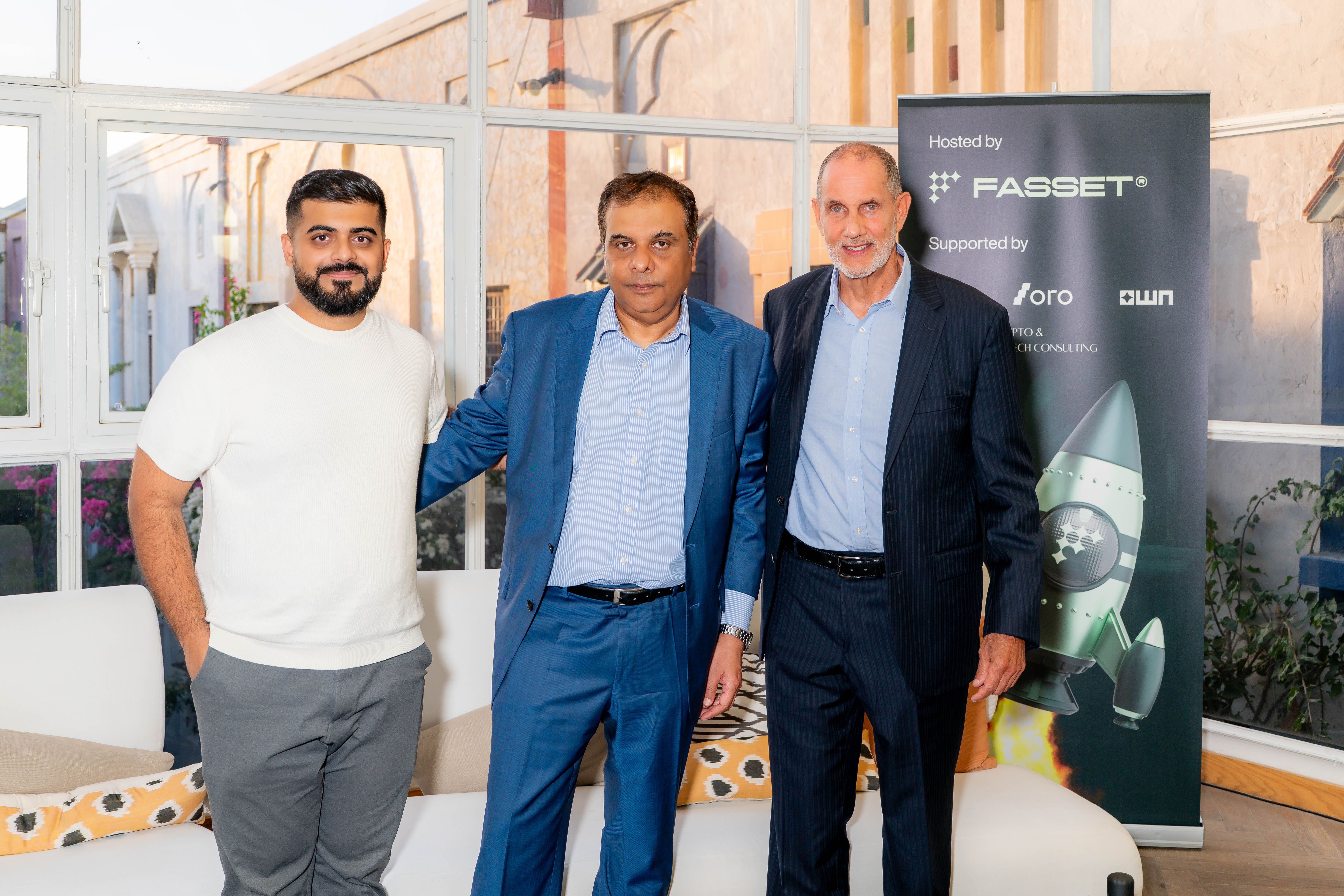
Press Release: Fasset Partners with Zand Bank and Capital Investment Holding to Unlock Real Estate Investing via Tokenization in Dubai
5 May 2025

Understanding Zakat on Investments: A Simple Guide for Aligning Your Wealth with Faith
5 February 2025

Disintermediation in the Modern Marketplace
2 May 2024

Financial Inclusion: Unlocking the Gateway to Economic Empowerment and Prosperity
2 May 2024
ORO Launches as First App Built on Fasset’s L2 Network, Unlocking $1B of Tokenized Gold On-Chain
17 December 2024

Bitcoin in 5 Minutes
2 May 2024
Own: The Future of Real-World Asset Tokenization
31 January 2025
$4 Trillion and Climbing: Nvidia Just Redefined the Game 🚀
11 July 2025
Stocks vs. Etfs
4 March 2025
Earn Rewards with Fasset: Your Guide to the Rewards Center
19 December 2024
Say Hello to IOWN: The Game-Changer for Real World Asset Ownership
11 September 2024
Fasset receives Category 3 Crypto-Asset Service provider license from Central Bank of Bahrain
27 January 2025
Portfolio Diversification: What does it mean?
22 October 2024

Blockchain: Clarified and Simplified
2 May 2024
Unspoken financial barriers still affecting millions today
13 January 2025